




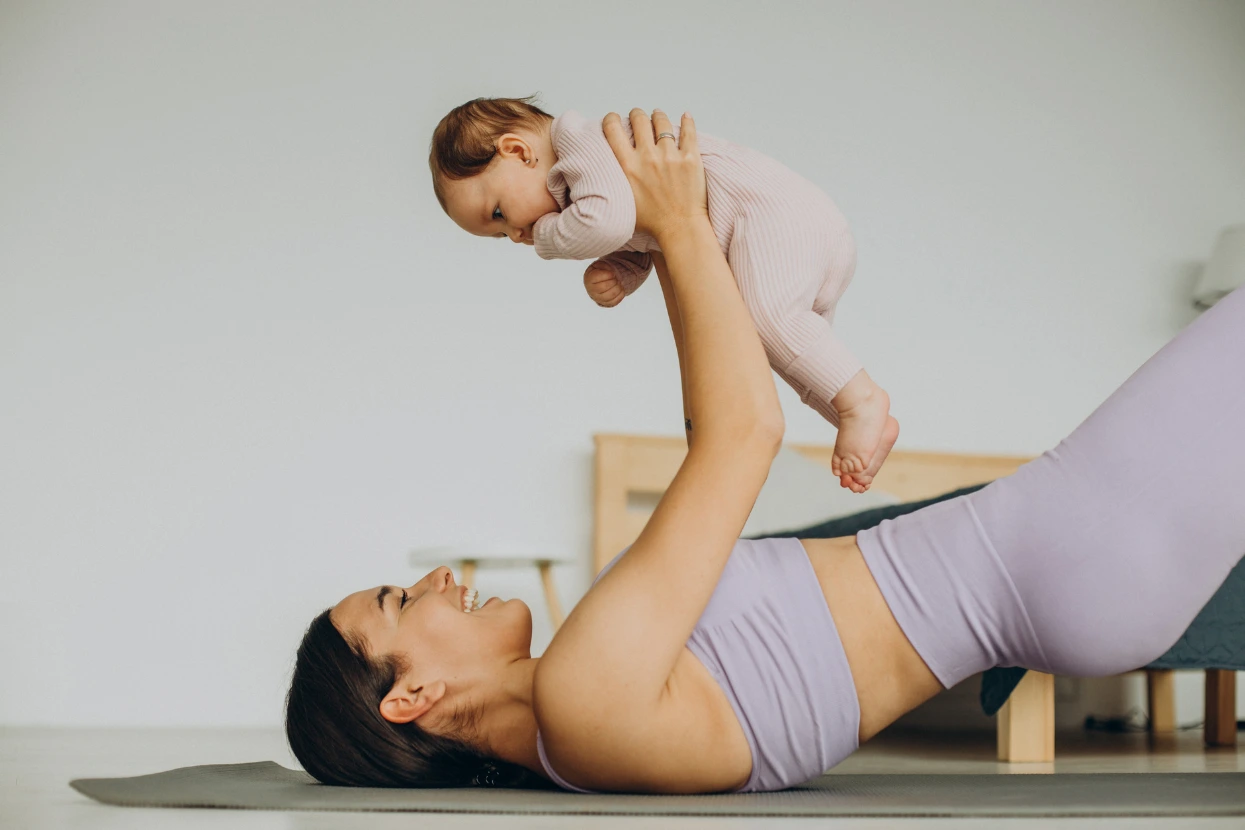
Postnatal physiotherapy in Mira Road at Dr. Vigil’s Advanced Physiotherapy helps new mothers rebuild core, pelvic floor and back strength after a normal or C-section delivery. Our physiotherapists assess you in private, explain your recovery in simple words, and plan gentle steps that fit life with a newborn. We see patients at our clinics in Mira Road and Mira Bhayandar.
Many mothers are told to just rest and wait for the body to settle. Rest matters, but a weak tummy, back pain or leaking urine often needs guided exercise. We work alongside your doctor so you recover safely.
Who is this for?
- New mothers after a normal or C-section delivery, once the doctor agrees
- Mothers with back, neck or shoulder pain from feeding and carrying
- Mothers with a tummy gap, a weak core or leaking urine
- Anyone unsure which exercises are safe after delivery
What is postnatal (post-delivery) physiotherapy?
It is physiotherapy for the weeks and months after childbirth. We check your posture, back, tummy muscles and pelvic floor, then give exercises and daily-habit advice for feeding, lifting and carrying your baby. It does not replace your doctor’s care. Postnatal physiotherapy in Mira Road adds a clear, step-by-step plan for getting strong again.
Your recovery in stages
| Stage | Focus | Keep in mind |
|---|---|---|
| First 6 weeks | Rest, breathing, gentle pelvic floor activation and safe movement | Roll onto your side before getting up, and avoid heavy lifting |
| After your doctor’s check | A short walk, then gentle core, back and pelvic floor exercises | Start only when your doctor clears you for activity |
| As you feel stronger | Building strength, posture and stamina step by step | Stop any move that makes your tummy bulge or causes pain |
Normal delivery and C-section: how care differs
- After a normal delivery: the pelvic floor often needs the most attention, along with your back and posture.
- After a C-section: your doctor decides when you can start, and we avoid pressure on the scar. The pelvic floor still needs care, because a caesarean birth does not protect it from strain.
Stronger exercise can follow once your doctor and physiotherapist agree you are ready.
Tummy gap after pregnancy (diastasis recti)
During pregnancy the tummy muscles can separate. The NHS says the two muscles down the middle of the stomach often spread apart by about two finger widths as the growing womb pushes them apart. The gap usually closes by around 8 weeks after birth. If it is still obvious at 8 weeks, see your doctor, as it may raise the risk of back problems. Signs include a ridge or bulge down the middle of the belly, more noticeable when you strain.
Exercise may help. Our physiotherapists check your gap and give slow, controlled exercises with deep breathing. The NHS advises avoiding sit-ups, planks and high-impact exercise at first, along with straining on the toilet and heavy lifting, while the stomach muscles recover.
Other problems we treat after delivery
- Low back pain and a stiff upper back from feeding and carrying your baby
- Leaking urine when you cough, sneeze or laugh
- A weak or sagging tummy
- Pelvic pain or discomfort
- Poor posture, which our posture correction physiotherapy can help
For persistent pain, see also our back pain physiotherapy.
How postnatal physiotherapy in Mira Road works at our clinic
- Assessment: we ask about your delivery, feeding, sleep and symptoms, then check posture, back, tummy gap and pelvic floor.
- Plan: gentle exercises matched to your stage, with a short home routine you can do while the baby sleeps.
- Guidance: safe ways to lift, feed, carry and get out of bed.
- Review: we update the plan as you get stronger and link it to your goals, including our personalised wellness plan.
You can read more about pelvic floor recovery in our blog on pelvic floor therapy for new moms.
Who should see a doctor first?
See your doctor before starting, or sooner, if you have heavy bleeding, fever, a C-section wound that is red, painful or leaking, severe pain, or a tummy gap wider than two fingers with pain. Get medical help for sudden chest pain or breathlessness. Our physiotherapists work alongside your doctor and will tell you when a medical check comes first.
Why choose Dr. Vigil’s for postnatal physiotherapy in Mira Road?
- Physiotherapist-led: qualified physiotherapists treat your back, core and pelvic floor together.
- Private, one-on-one care: you are assessed and treated in a private room.
- Safe pace: we match exercise to your delivery and healing, not a fixed chart.
- Honest advice: we never promise quick results or a flat tummy by a date.
This page is part of our women’s health physiotherapy in Mira Road services, and we also offer physiotherapy in Mira Road for pain and injury.
Postnatal physiotherapy in Mira Road, Mira Bhayandar and nearby areas
We see patients at two clinics: Mira Road (Shanti Nagar, Sector 9) and Mira Bhayandar (Beverly Park, near Cinemax Road), open 7 days a week. We serve Mira Road, Bhayandar, Kashimira, Naya Nagar, Poonam Vihar and nearby areas.
Book Your Postnatal Assessment
Start with an assessment. We will listen to your concerns, explain what is realistic and plan your postnatal physiotherapy in Mira Road at the branch nearest you. Call Mira Road on +91 88799 89583 or Mira Bhayandar on +91 86551 88896. Both clinics are open 7 days a week.
Postnatal physiotherapy FAQs
It is physiotherapy after childbirth. A physiotherapist checks your posture, back, tummy muscles and pelvic floor, then gives a gentle plan to rebuild strength and teaches safe ways to lift and carry your baby.
Ask your doctor first. Many women see their doctor around 6 weeks after delivery. Gentle breathing and pelvic floor activation may be fine earlier, but get your doctor’s approval before adding exercise.
Yes. Your doctor decides when you can start, and we avoid pressure on the scar. Your pelvic floor, back and posture still need care, because a caesarean birth does not protect the pelvic floor from strain.
It is a gap between the left and right tummy muscles, common in pregnancy. The NHS says it usually closes by about 8 weeks after birth, and advises seeing a doctor if it is still obvious. Slow, controlled exercises can help, and we check your gap in the assessment.
The NHS advises avoiding sit-ups, planks and high-impact exercise at first, along with heavy lifting and straining on the toilet, while the tummy muscles recover. We guide what is safe for you.
Yes. Back pain, a weak core and a weak pelvic floor are often linked, so we assess them together and build one plan. See your doctor first if you have blood in your urine or fever.
It depends on your delivery, symptoms and goals. After the first assessment we explain what to expect and review your plan as you progress. We cannot promise a fixed number or result.
At Dr. Vigil’s Advanced Physiotherapy: Mira Road (Shanti Nagar, Sector 9), call +91 88799 89583, or Mira Bhayandar (Beverly Park, near Cinemax Road), call +91 86551 88896. Both clinics are open 7 days a week.